
Buying land in Kenya is one of the best investments you can make, but it requires careful due diligence. Land fraud is common, and skipping a step can cost you your entire investment. Here’s the process from start to finish.
Step 1: Find the Land
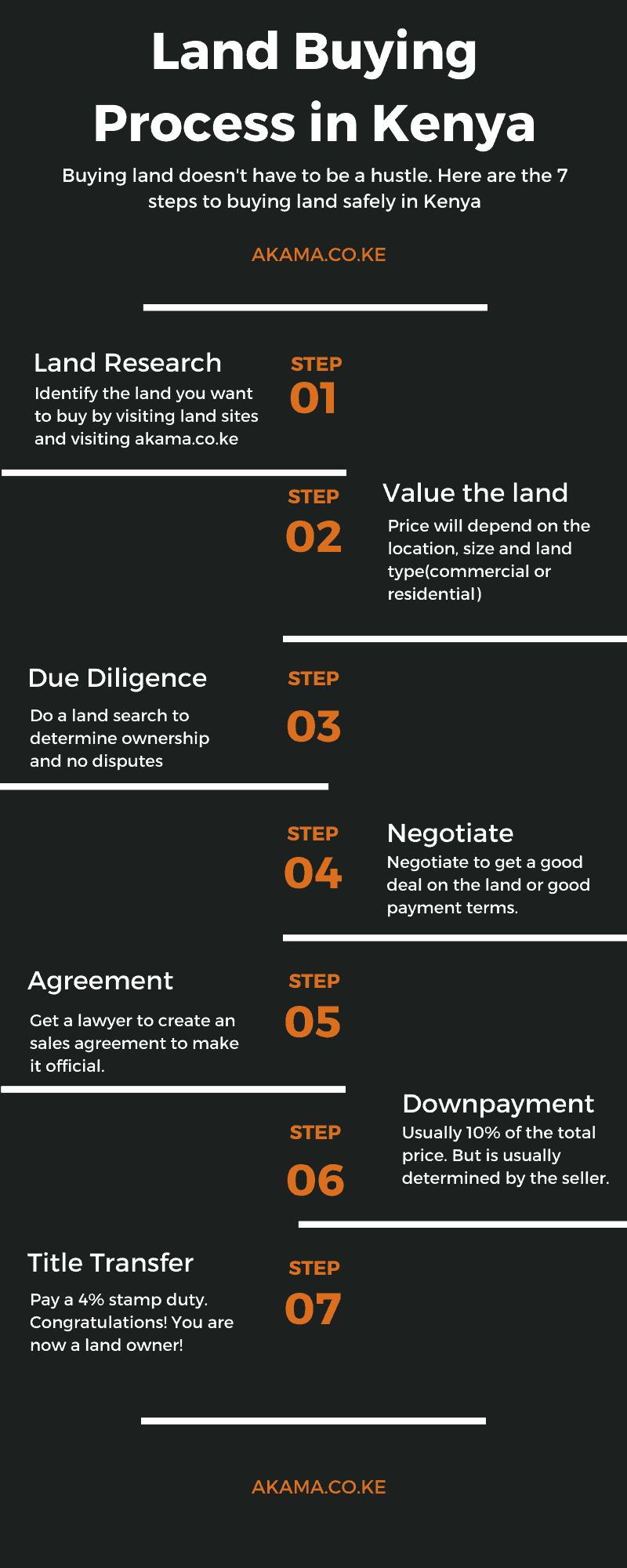
Search for a plot that fits your budget and intended use. Visit the site in person. Never buy land you haven’t seen. Know the plot size, type of ownership, and whether it suits your plans.
If you’re not sure where to look, see our guide on the best places to buy land in Kenya.
Step 2: Do a Land Search
Go to the Ministry of Lands (or a local Lands Office) and request a search using the seller’s title deed number. Costs Ksh 500. This tells you who the registered owner is, whether the title is real, and whether there are any encumbrances.
This is the single most important step. Don’t skip it.
Step 3: Visit and Verify Boundaries
Go to the actual plot. Confirm that what’s on the ground matches what’s on paper. Talk to neighbours. Check for disputes or anyone else claiming the land.
Step 4: Get Survey Maps
Request maps from the Survey of Kenya or hire a licensed surveyor. These confirm the exact measurements and location of the plot.
Step 5: Confirm the Seller Can Sell
Make sure the seller has the legal right:
- Individual? Their name must match the title deed.
- Company? Confirm the directors have board approval.
- Land control area? The seller needs consent from the Land Control Board.
Step 6: Sign the Sale Agreement
The sale agreement outlines the purchase price, payment schedule, completion date, and penalties. The standard deposit is 10% of the purchase price, paid through lawyers’ accounts (not directly to the seller). Both sides should have their own lawyer.
Step 7: Get Land Rent Clearance
If the land is leasehold, get a clearance certificate from the county government confirming no outstanding rent arrears. Without this the transfer can’t go through.
Step 8: Valuation and Stamp Duty
Apply for a government valuation. Based on the assessed value, you pay stamp duty to KRA: 4% for urban properties, 2% for rural. This must be paid before the transfer proceeds.
Step 9: Transfer the Title
The seller’s lawyer prepares transfer documents. Both parties sign. The buyer pays the remaining balance through lawyers. The stamped documents get lodged at the Lands Registry.
Once registered, you get a new title deed in your name. You’re a landowner.
How Long Does It Take?
Usually 2 to 4 months, depending on how fast the land search comes back, whether Land Control Board consent is needed, and processing times at the registry. Good lawyers on both sides speed things up a lot.
Common Mistakes
- Buying without a land search (the number one way people lose money)
- Paying the full amount upfront instead of using an escrow arrangement
- Not visiting the land in person
- Skipping the survey (boundary disputes are common and expensive)
- Buying through a broker without confirming who actually owns the land
Can’t afford to pay everything at once? Look into title deed loans.

